
Barbados: Invasive Sargassum of the Caribbean
Two weeks in Barbados with researchers at UWI, government officials and community groups, surveying candidate sites for a processing pilot.
Important groups: Seafields, University of the West Indies, Skeete's Bay Market, the Coastal Zone unit, the Ministry of Environment and National Beautification, Green and Blue Economy.
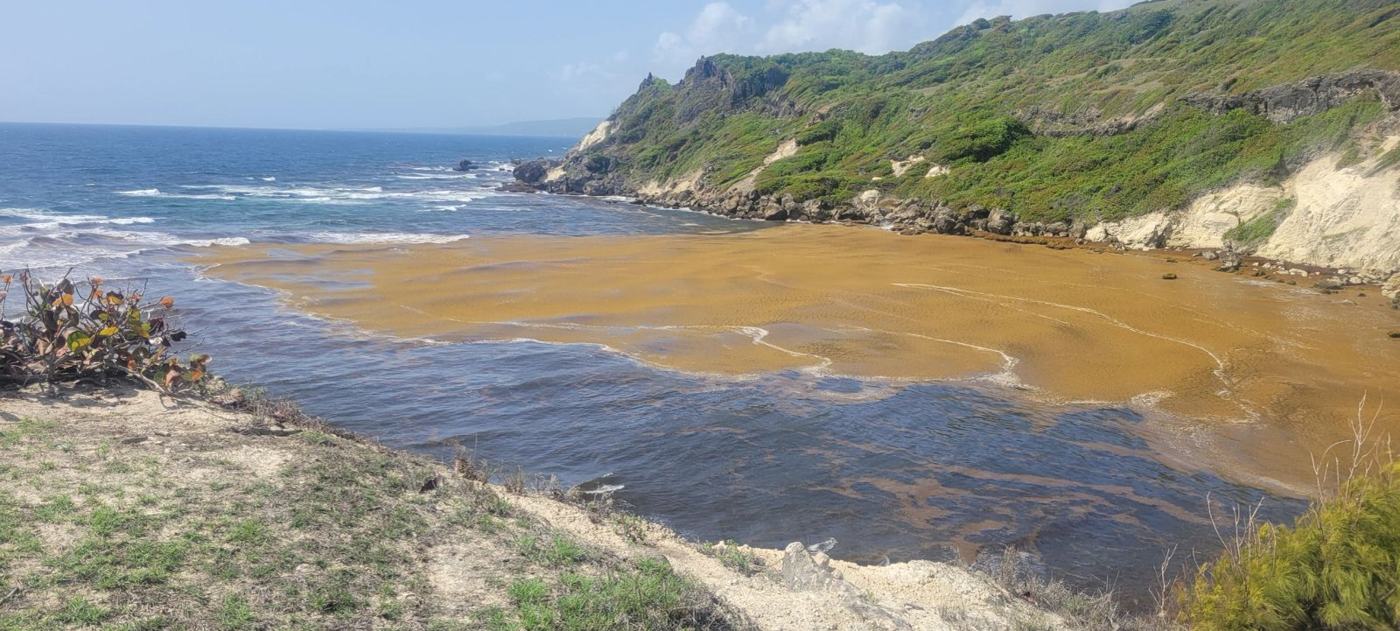
Overview. SSG continues to look for practical strategies to support Caribbean nations whose beaches are overwhelmed by seaweed blooms each spring and summer. In May, SSG was invited to Barbados to support Seafields' SeaSINC project. In June the team returned to meet researchers and partners, identify hurdles for the island's sargassum industry, and find candidate sites for processing demonstrations. The trip showed the need for economically viable, scalable solutions.
University of the West Indies
SSG met UWI researchers working to turn sargassum into a resource: Dr. Srinivasa Popuri on alginate extraction and alginate-based sorbents, Dr. Emma Smith on sargassum's environmental chemistry, and Dr. Legena Henry on sargassum as a biogas feedstock. All expressed interest in working with SSG on screw press technology. As a visiting scholar, Dr. Spencer Serin gave his seminar to UWI students and faculty, including CERMES, and spent three days in the chemistry lab converting dried sargassum into sodium alginate, calcium alginate and alginic acid.
Community partners
SSG met chef and hospitality leader Michael Hinds and the Skeete's Bay Market group, who are working to revive a fish market overwhelmed by sargassum into a food and tourism hub, and discussed future collaboration.
Industry hurdles
SSG met the director of the coastal zone unit and, the next day, senior Ministry of Environment officials. Barbados has funded clean-up efforts for a decade, focused on beach clean-up with little attention to processing. The consensus: sargassum removal has to become profitable to work. SSG's view is that scalable processing is the first step to learning which products are realistic.
Candidate pilot sites
The team surveyed River Bay (St. Lucy), Skeete's Bay (St. Philip) and Morgan Lewis Beach (St. Andrew). River Bay and Skeete's Bay, with road access, hard standing and local interest, stood out as candidates for a mobile processing pilot. Morgan Lewis Beach collects large volumes but is harder to reach.
Key takeaways
- There is strong appetite in Barbados for processing technology, pilots and training that turn sargassum into viable products.
- Skeete's Bay and River Bay show promise for processing pilots, and the government is keen to support initiatives that involve Barbadians.
- UWI's research environment suits targeted studies on specific applications, including agriculture.
- Any project must work economically. To date, companies in Barbados have not converted sargassum into products at a profitable scale.